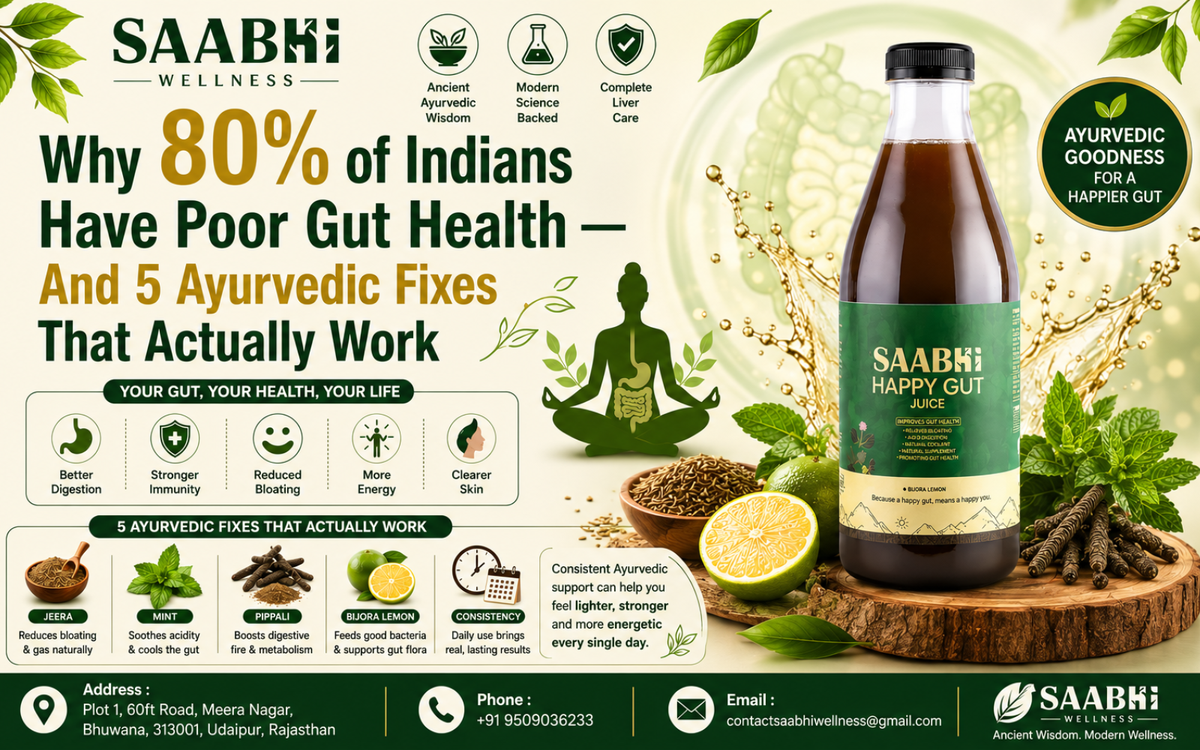
Bloating after lunch, acidity by evening, heaviness after dinner: these are some of the most common complaints in Indian homes. Erratic meal times, oily and spicy food, late dinners, low fibre and stress all play a part. Ayurveda's answer starts with agni, your digestive fire, and keeping it steady.
1. Why should I eat at the same times every day?
Your gut runs on a body clock, just like sleep. Regular meal times help it prepare for food. Ayurveda says agni is strongest around midday, so make lunch your main meal and keep dinner lighter and at least 2 to 3 hours before bed.
2. Which spices help digestion?
| Spice | Traditional use | Easy way to use it |
|---|---|---|
| Jeera (cumin) | Gas and bloating | Jeera water: 1 tsp boiled in a glass of water |
| Saunf (fennel) | Heaviness after meals | Chew half a teaspoon after meals |
| Ajwain (carom) | Gas and cramps | A pinch with warm water |
| Pudina (mint) | Cooling, settles the stomach | Fresh mint in chaas or chutney |
| Pippali (long pepper) and sonth (dry ginger) | Kindling agni | A pinch in warm water before heavy meals |
3. How much should I eat at each meal?
Ayurveda suggests filling the stomach about half with food, a quarter with liquid, and leaving a quarter empty. In practice: eat slowly, put the phone down, and stop when you are comfortably satisfied, not full.
4. Is warm water better than cold water for digestion?
Ayurveda prefers warm or room-temperature water and advises against iced drinks with meals, which it says dampen agni. Sip small amounts during meals and drink most of your water between meals.
5. Why walk after meals?
A gentle 10-minute walk after lunch and dinner (shatapavali, "a hundred steps") helps food move along and keeps you from lying down on a full stomach, a common cause of acidity.
What does the research say?
Modern research supports some of these traditions, mostly in small studies. A case series found cumin extract eased symptoms in people with irritable bowel syndrome [1]. A meta-analysis of peppermint oil capsules found symptom relief in IBS [2]; mint in food is milder, but the tradition points the same way. Reviews also show that dietary fibre feeds helpful gut bacteria [3]. These studies don't test any of our products.
- Agah S et al. (2013). Cumin extract for symptom control in patients with irritable bowel syndrome: a case series. Middle East J Dig Dis. PubMed
- Alammar N et al. (2019). The impact of peppermint oil on the irritable bowel syndrome: a meta-analysis of the pooled clinical data. BMC Complement Altern Med. PubMed
- Makki K et al. (2018). The impact of dietary fiber on gut microbiota in host health and disease. Cell Host Microbe. PubMed
Is there an easy way to get these spices every day?
Happy Gut Juice brings these traditional digestive spices together on a Bijora (citron) juice base. Each 10 ml has Jeera 400 mg plus Pudina, Saunf, Sonth, Kali Mirchi, Pippali, Dhaniya and Tejpata, with Kala Namak and Saindhav. Take 30 ml twice a day, after lunch and dinner. It is not sugar-free: the citron base contains natural sugar, so factor it in if you track sugar.
When should I see a doctor about digestion?
Read about the gut-brain connection, or explore the gut health range.