Friday drinks, a Saturday party, feeling mostly fine by Monday. So does any of it matter? Feeling fine doesn't tell you much, because the first stage of alcohol damage often has no symptoms at all [1]. Here's what the numbers look like in the pegs and bottles you actually drink. For everyday habits beyond alcohol, read our guide to supporting your liver naturally.
How much is too much?
The guidelines count in standard drinks, each with about 14 g of alcohol. The Merck Manual uses these definitions [1]:
| Pattern | Men | Women |
|---|---|---|
| Moderate | Up to 2 drinks a day | Up to 1 drink a day |
| Heavy | More than 4 a day, or more than 14 a week | More than 3 a day, or more than 7 a week |
| Binge | About 5 in 2 hours | About 4 in 2 hours |
The World Health Organization's position, noted in the same source, is that no level of alcohol is completely safe [1].
What does that mean in pegs and beers?
Standard drinks don't match Indian servings, so we did the arithmetic. These are approximate, assuming 40% whisky and 5% beer:
- Small peg (30 ml whisky): about 9.5 g of alcohol, or roughly 0.7 of a standard drink.
- Large peg (60 ml whisky): about 19 g, or roughly 1.4 drinks.
- Bottle of beer (650 ml): about 26 g, or roughly 1.8 drinks.
Three large pegs in an evening is about 4 standard drinks. Three 650 ml beers is more than 5, which is in binge territory if you drink them within about 2 hours. A strong beer or a generous home pour pushes these numbers higher.
What does alcohol do to your liver?
The damage comes in three stages, and they don't all reverse [1].
| Stage | How common in people who drink too much | Can it reverse? |
|---|---|---|
| Fatty liver | Over 90% | Sometimes. May resolve within 6 weeks if you stop and have no fibrosis |
| Alcoholic hepatitis (inflammation) | About 10 to 35% | Ranges from mild to life-threatening; needs medical care |
| Cirrhosis (permanent scarring) | About 10 to 20% | Usually not |
Not everyone who drinks heavily for years develops liver disease, but risk generally rises with how much and how long you drink. Merck notes that heavy drinkers usually first show symptoms in their 30s or 40s, often with serious problems about 10 years later [1]. That's the trap: the years that feel fine are the years when you could still change course most easily.
Why are women at higher risk?
Women are more vulnerable to alcohol-related liver damage, even after adjusting for smaller body size. Merck says risk starts at about half the amount that affects men, possibly because women's digestive systems process alcohol less effectively, so more of it reaches the liver [1].
Will a detox or supplement undo it?
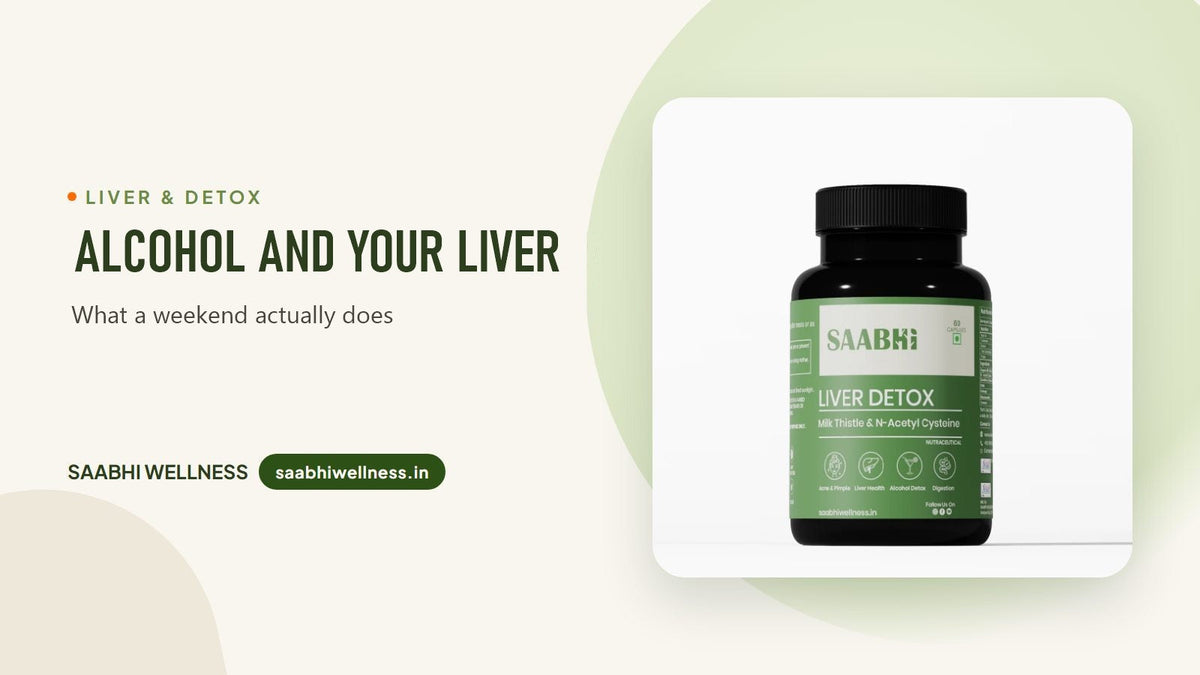
No. This is the part we'd rather say plainly, even though we sell a liver supplement. Trials of milk thistle in alcohol-related liver disease have been conflicting or too small to draw conclusions [2], and nothing in a capsule lets you drink more safely. Our Liver Detox Capsules are a daily wellness supplement, not a treatment or a hangover fix. What the evidence above supports is drinking less, or stopping.
What should you do if you drink most weekends?
- Count honestly for two weekends, in standard drinks, using the numbers above.
- Set a limit before you start drinking, and space your drinks out.
- Ask your doctor about a liver function test, and tell them how much you really drink.
Frequently asked questions
How long does it take the liver to recover from alcohol?
If you stop drinking and have no fibrosis, fatty liver may completely resolve within 6 weeks. Cirrhosis usually cannot be reversed, so ask your doctor how your own liver is doing.
Is drinking only on weekends safe?
Not automatically. Having about 5 drinks in 2 hours for men, or 4 for women, counts as binge drinking even if you don't drink during the week. The World Health Organization says no level of alcohol is completely safe.
Can milk thistle protect my liver from alcohol?
This hasn't been shown. Trials in alcohol-related liver disease have been conflicting or too small to draw conclusions, so drinking less is the reliable approach.
Sources
- Merck Manual Consumer Version. Alcohol-Related Liver Disease. merckmanuals.com
- NCCIH. Milk Thistle. Updated February 2025. nccih.nih.gov