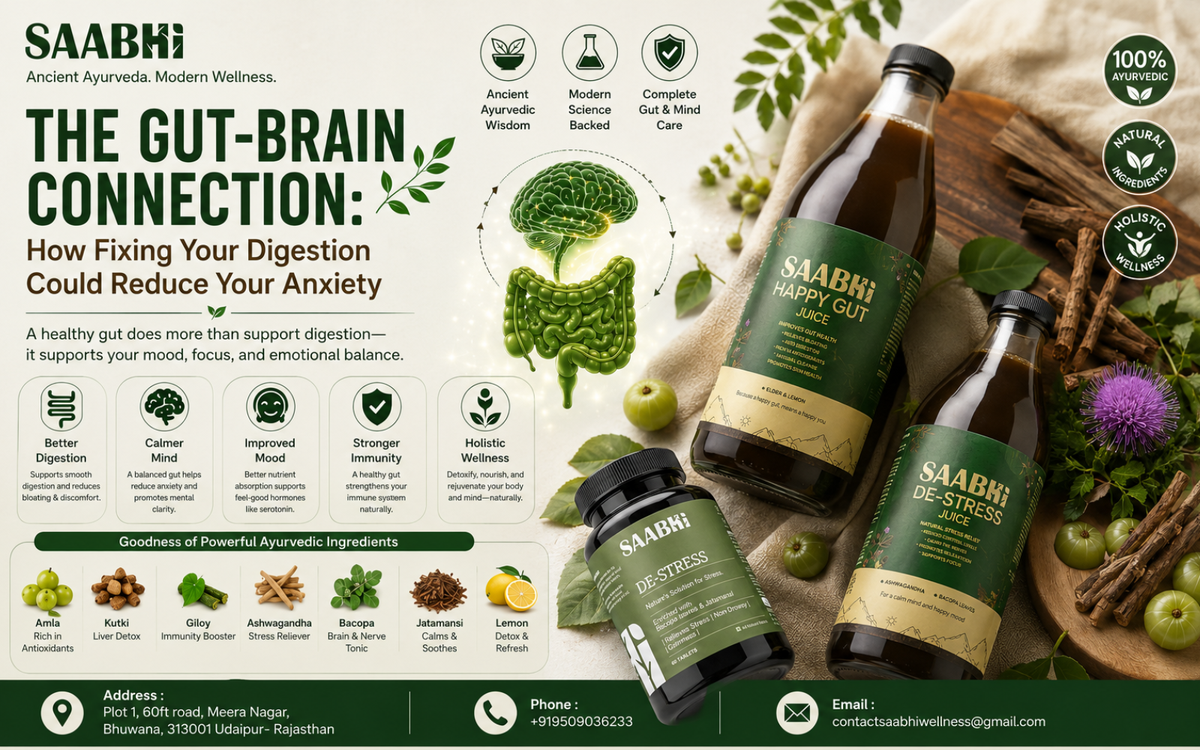
Do you ever notice that a stressful day leaves your stomach in knots, or that a heavy, undigested meal makes you feel foggy and irritable? That's not a coincidence. The gut brain connection ayurveda has spoken about for thousands of years is now being backed by modern science, explaining why digestion and mental state are far more linked than most people realize. In this guide, we'll break down what the gut-brain connection actually is, how gut health affects mental health, what ayurvedic medicine for digestion and stress recommends, and simple steps you can start today — with support from Saabhi Wellness's Ayurvedic formulations along the way.
What Is the Gut-Brain Connection in Ayurveda?
Ayurveda has always treated the gut as the root of overall wellbeing. The gut brain connection ayurveda describes is built around Agni (digestive fire) and its direct link to Manas (the mind). When Agni is weak, undigested food turns into Ama — a toxic residue that Ayurveda believes clouds mental clarity, disturbs sleep, and fuels anxiety and irritability. Modern science calls this the "gut-brain axis," a two-way communication network between the digestive system and the central nervous system — Ayurveda simply arrived at this understanding centuries earlier, through the lens of doshas rather than neurotransmitters.
The Vagus Nerve and Doshas
The vagus nerve is the physical highway connecting your gut and brain, sending signals in both directions. In Ayurvedic terms, an aggravated Vata dosha is often behind this same communication breakdown — causing bloating, irregular digestion, restlessness, and anxious thoughts all at once. This is precisely why the gut brain connection ayurveda framework focuses on calming Vata and strengthening Agni together, rather than treating gut issues and mental symptoms separately.
How Gut Health Affects Mental Health
Roughly 90% of the body's serotonin — the neurotransmitter tied to mood and calmness — is produced in the gut, not the brain. This single fact explains a lot about how gut health affects mental health: when your gut lining is inflamed, or your gut bacteria are imbalanced, serotonin production drops, and so does your emotional resilience. Here's how this plays out in daily life:
-
Poor Digestion: When food isn't broken down properly, your body spends far more energy on digestion than on daily functioning, which leaves you drained, unfocused, and mentally sluggish throughout the day.
-
Gut Inflammation: Chronic irritation in the gut can trigger inflammatory signals that travel to the brain, worsening brain fog and making everyday stress feel far more overwhelming than it actually is.
-
Imbalanced Gut Bacteria: An unhealthy gut microbiome has been linked in multiple studies to higher rates of anxiety and depressive symptoms, showing how deeply gut balance shapes emotional stability over time.
Signs Your Gut Is Affecting Your Mood
If you experience frequent bloating, acidity, irregular bowel movements, along with anxiety, restlessness, or trouble sleeping, your digestion may be a bigger driver of your mental state than you think. Many people notice their mood dips soon after a heavy or poorly digested meal — a pattern that shows exactly how gut health affects mental health in everyday life, not just in theory.
Why This Matters Long-Term
Left unaddressed, this cycle tends to reinforce itself — poor digestion lowers mood, low mood affects appetite and eating habits, and disrupted eating habits further weaken digestion. Recognizing how gut health affects mental health early on makes it far easier to break this loop before it becomes a long-standing pattern, rather than managing anxiety and digestive issues as chronic, unrelated conditions for years.
The Science Behind Gut Bacteria and Anxiety
Research on the gut microbiome has exploded in the last decade, and much of it validates what Ayurveda proposed long ago. Beneficial gut bacteria help produce short-chain fatty acids that support brain health, regulate cortisol, and influence sleep quality. When harmful bacteria outnumber beneficial ones — often due to poor diet, stress, or processed foods — anxiety symptoms can worsen even if nothing else in your life has changed, which is why Ayurveda's food-as-medicine approach treats gut flora as indirectly acting on mood too.
Common Gut Disruptors in Daily Life
Modern habits often work directly against gut bacteria without us realizing it. Late-night eating, frequent use of processed or packaged food, excessive caffeine on an empty stomach, and chronic stress all reduce the diversity of beneficial gut bacteria over time. Ayurveda has always cautioned against these same patterns — not because they were studied in a lab, but because their effects on digestion and temperament were observed consistently across generations.
Ayurvedic Medicine for Digestion and Stress
When it comes to ayurvedic medicine for digestion and stress, the goal is never to mask a symptom — it's to correct the root imbalance. Traditional Ayurvedic practice combines herbs, daily routines, and dietary adjustments to restore both digestive strength and mental calm together, rather than offering one without the other.
Herbs and Remedies
Some of the most trusted herbs in ayurvedic medicine for digestion and stress include:
-
Triphala: This classical herbal blend supports healthy digestion and gentle detoxification, helping the body eliminate accumulated toxins while restoring regularity and easing the bloating that often disrupts daily comfort.
-
Ashwagandha: Known as a powerful adaptogen, this herb helps the body manage everyday stress more effectively while supporting balanced cortisol levels, which in turn protects both energy and mood.
-
Brahmi: Traditionally used to calm an overactive mind, Brahmi supports mental clarity and focus, making it especially useful during periods of prolonged stress, overthinking, or emotional restlessness.
-
Ginger and Cumin: These everyday kitchen spices help kindle Agni, the digestive fire, while reducing the bloating and heaviness that frequently accompany stress-related eating patterns or irregular meals.
-
Shankhpushpi: A traditional herb valued for helping ease restlessness and promote restful sleep by naturally calming the nervous system after long, mentally demanding, or stressful days.
Daily Ayurvedic Routines (Dinacharya)
Beyond herbs, Ayurveda emphasizes consistent daily routines: eating meals at fixed times, avoiding cold or raw foods late in the day, chewing food thoroughly, and winding down before bed instead of scrolling on a screen. These simple habits directly reduce the Vata aggravation that disrupts both digestion and peace of mind.
Ayurvedic Gut Health Juice in India: Fixing Digestion Naturally
If your gut has been sluggish, bloated, or simply "off" for a while, a natural digestive reset is often more effective than reaching for over-the-counter antacids. This is where a well-formulated Ayurvedic Gut Health Juice in India can help — made with digestion-supporting herbs, it's designed to gently strengthen Agni, ease bloating, and restore regularity without harsh chemicals or artificial additives. Unlike quick-fix syrups, this kind of juice works with the body's natural rhythm rather than against it, supporting the same digestive fire Ayurveda has always considered central to mental clarity. Many people find that as bloating and acidity reduce, mood and focus improve alongside it, which is the gut-brain connection playing out in real time.
Ayurvedic Stress Relief Tablets: Managing Stress the Ayurvedic Way
Since gut health and stress fuel each other, addressing stress directly is just as important as fixing digestion. This is where targeted Ayurvedic Stress Relief Tablets come in — formulated with adaptogenic herbs like Ashwagandha and Brahmi, they help the body regulate its stress response over time, rather than offering a temporary calming effect that wears off within hours. Adaptogens work by helping the body adapt to stress rather than simply sedating the nervous system, which is why their effects tend to build gradually and last longer. Taken consistently, these tablets support the same Vata-calming effect that Ayurveda has always linked to steady digestion and a settled mind.
Ayurvedic Stress Relief Juice in India: A Faster-Absorbing Option
For those who prefer a more easily absorbed format, Ayurvedic Stress Relief Juice in India offers the same adaptogenic benefits in liquid form — often easier on the digestive system and quicker for the body to take up, especially for anyone whose stress already shows up as digestive discomfort. Whether you choose the tablets or this juice, consistency matters more than the format itself, since these remedies are traditionally taken daily over weeks to rebalance Vata and support sustained calm.
How Saabhi Wellness Supports the Gut-Brain Connection
Saabhi Wellness was built around this exact philosophy — that you cannot treat the mind without treating the gut, and vice versa. Rather than offering isolated products, Saabhi Wellness formulates its digestive and stress-support ranges to work together, rooted in classical Ayurvedic texts but adapted for how people actually live today — busy schedules, inconsistent meals, and constant low-grade stress. Whether someone comes to Saabhi Wellness for bloating, low energy, anxiety, or poor sleep, the approach stays the same: strengthen digestion, calm the nervous system, and let the body's natural gut-brain communication repair itself.
Who Can Benefit From This Approach
People dealing with persistent bloating, acidity, low-grade anxiety, irregular sleep, or stress-related fatigue are typically the ones who see the most noticeable change. Since the gut brain connection ayurveda addresses works on root causes rather than isolated symptoms, results tend to build gradually rather than appearing overnight — which is also why consistency matters more than trying multiple remedies at once.
Simple Daily Habits to Improve Gut-Brain Health
Alongside any Ayurvedic remedy, a few consistent habits go a long way:
-
Eat Your Largest Meal at Midday: Digestive fire is naturally strongest around noon, so having your biggest, most nourishing meal during this window helps the body digest more efficiently and completely.
-
Avoid Eating Late at Night: Give your gut at least two to three hours before bed, since eating too close to sleep disrupts digestion and often leads to restless, poor-quality sleep.
-
Practice Slow, Mindful Eating: Rushing through meals at your desk overwhelms digestion, so slowing down and chewing thoroughly allows your body to absorb nutrients and signal fullness properly and consistently.
-
Include Warm, Cooked Foods: Favoring warm, cooked meals over cold or raw foods supports digestive fire, especially during stressful periods when the body needs steady, easily absorbed nourishment throughout the day.
-
Set a Consistent Sleep Schedule: Poor or irregular sleep worsens both digestion and anxiety, so going to bed and waking up at the same time daily supports overall balance in the body.
-
Take a Short Walk After Meals: A brief walk after eating supports natural digestion far better than sitting immediately, helping prevent the bloating and sluggishness that often follow particularly heavy meals.
-
Stay Consistent with Herbal Support: Ayurvedic remedies work cumulatively rather than instantly, so maintaining a steady daily routine matters far more than switching between different products too frequently or without patience.
Bringing Ayurveda and Modern Life Together
One of the biggest misconceptions about the gut brain connection ayurveda addresses is that it requires a complete lifestyle overhaul. In reality, most people don't need to abandon their routines — they need to correct a few habits that quietly disrupt both digestion and mental calm, like eating on the go or relying on caffeine to push through fatigue that's actually rooted in poor digestion. Pairing a consistent herbal routine with these small shifts reflects exactly how gut health affects mental health when the two are supported together rather than separately.
Frequently Asked Questions
Q1. What is the gut-brain connection in Ayurveda?
The gut brain connection ayurveda describes is the relationship between Agni (digestive fire) and Manas (the mind). When digestion is weak, undigested toxins (Ama) build up and are believed to disturb mental clarity, mood, and sleep.
Q2. How does gut health affect mental health?
Since around 90% of the body's serotonin is produced in the gut, poor digestion and gut inflammation can directly lower mood, increase anxiety, and cause brain fog. Healthy gut bacteria support better emotional regulation.
Q3. Which Ayurvedic herbs help with both digestion and stress?
Triphala, Ashwagandha, Brahmi, ginger, and Shankhpushpi are commonly used in ayurvedic medicine for digestion and stress, as they support Agni while calming an aggravated Vata dosha.
Q4. Can fixing my digestion really reduce anxiety?
Yes, for many people. Since gut and brain health are closely linked, improving digestion often reduces inflammation and boosts serotonin production, which can ease anxiety symptoms over time.
Q5. How long does it take for Ayurvedic remedies to show results?
Ayurvedic remedies, including an Ayurvedic Gut Health Juice in India or Ayurvedic Stress Relief Tablets, typically work gradually. Most people notice initial improvements in 2-4 weeks with consistent daily use.
Q6. Is Ayurvedic Stress Relief Juice better than tablets?
Neither format is inherently better — Ayurvedic Stress Relief Juice in India may be absorbed more quickly, while tablets offer convenience for daily routines. The right choice depends on personal preference and lifestyle.
Q7. How does Saabhi Wellness support the gut-brain connection?
Saabhi Wellness formulates its digestive and stress-support products to work together, using classical Ayurvedic herbs adapted for modern routines, so digestion and mental calm are addressed as one connected system rather than separately.
Final Thoughts
The link between your gut and your mental state isn't a wellness trend — it's a relationship Ayurveda identified long before modern research caught up. If anxiety, low mood, or brain fog have been part of your life alongside digestive discomfort, addressing both together through diet, daily routine, and trusted ayurvedic medicine for digestion and stress is likely to bring far more relief than treating either issue alone. Brands like Saabhi Wellness exist precisely to make this integrated approach accessible, combining classical herbs with modern convenience so you don't have to choose between fixing your gut and calming your mind.