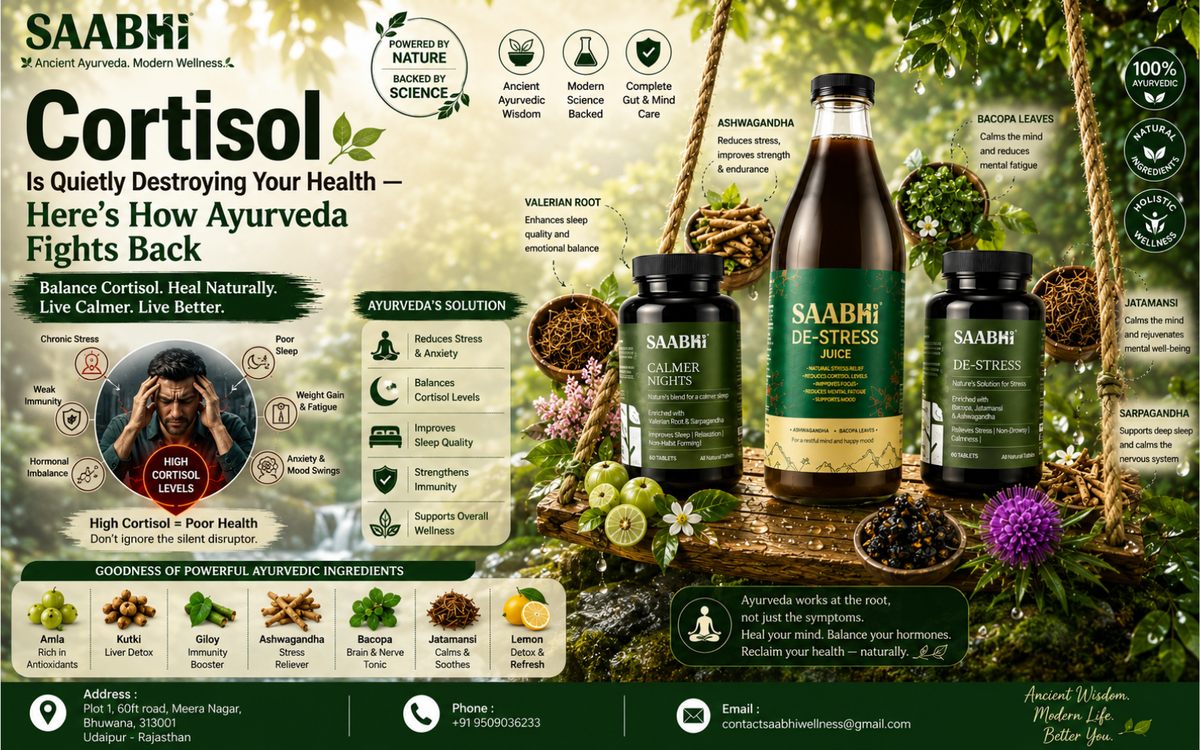
Millions of people across Indian cities wake up tired before the day has even started. Traffic, deadlines, screens, and constant notifications keep the body in a low-grade state of alert — and cortisol, the body's primary stress hormone, is often the hidden reason why. Understanding how to reduce cortisol naturally with Ayurveda has become one of urban India's most searched wellness goals, and the tradition offers something rarer than a quick fix: an approach grounded in centuries of practice and increasingly supported by modern research. Saabhi Wellness builds its stress-care range around this principle — that calm is restored through consistency, not overnight promises. The line includes Ayurvedic Stress Relief Tablets for daytime focus, Ayurvedic Sleep Tablets in India for restorative rest, and Ayurvedic Stress Relief Juice in India for a lighter daily ritual.
Understanding Cortisol: The Hormone Behind Urban Exhaustion
Cortisol is a hormone produced by the adrenal glands. Often called the "stress hormone," it helps your body respond to stress, regulate metabolism, control blood sugar levels, and support immune function. In short bursts it's useful — it sharpens focus and helps the body respond to a genuine threat. Problems begin when cortisol never switches off. In a world of back-to-back meetings and late-night scrolling, the body forgets how to relax, and cortisol stays elevated around the clock.
Over time this shows up as more than "feeling stressed." It can mean fatigue even after a full night's sleep, weight gain around the abdomen, weakened immunity, mood swings, and trouble concentrating. These are physiological signs, not personality flaws — which is exactly why so many people are looking past sedatives and stimulants toward gentler, sustainable options.
Why Modern Lifestyles Keep Cortisol Elevated
A handful of everyday habits quietly keep cortisol elevated in most urban routines:
-
Irregular sleep schedules from late-night work or screens, which disrupt the body's natural cortisol rhythm
-
Skipped or rushed meals, causing blood sugar swings that trigger extra cortisol release
-
Constant digital stimulation, keeping the nervous system in a mild but continuous state of alert
-
Limited physical movement, leaving the body fewer natural outlets to burn off stress hormones
-
Excess caffeine, which can spike cortisol further, especially on an empty stomach
None of these habits are unusual. They're part of modern city life — which is exactly why so many people are searching for how to reduce cortisol naturally with Ayurveda, using routines that fit a busy schedule rather than requiring a complete overhaul.
The Ayurvedic Approach to Cortisol Balance
Ayurveda treats mind and body as connected systems rather than isolating cortisol as a number to control. When people ask how to reduce cortisol naturally with Ayurveda, the answer usually rests on three pillars: adaptogenic herbs, a disciplined daily routine (dinacharya), and calming practices like pranayama and gentle yoga.
Adaptogens are central to this. Unlike caffeine, which forces alertness, or sedatives, which force rest, adaptogens are believed to work with the body's own feedback systems — supporting cortisol when it needs to rise, and helping it fall when it should. Daily routine matters just as much: consistent sleep timing, regular meals, and quiet moments each day often make the biggest difference for people managing chronic stress.
Ashwagandha and Cortisol: What the Research Says
Ashwagandha is the herb most associated with how to reduce cortisol naturally with Ayurveda. Used for centuries as a Rasayana (rejuvenating tonic), it's now among the most studied adaptogens worldwide. Several clinical trials — including a widely cited 2019 randomized controlled study published in Medicine — have measured reduced serum cortisol levels in adults taking standardized ashwagandha extract over 8 weeks compared to placebo.
Researchers believe ashwagandha helps regulate the hypothalamic-pituitary-adrenal (HPA) axis, the communication pathway between brain and adrenal glands that governs cortisol release. People who take it consistently often report feeling calmer without daytime drowsiness, and easier sleep onset without next-day grogginess. As with any supplement, individual results vary, and it's worth discussing use with a doctor if you're pregnant, on medication, or managing a chronic condition.
Daytime Cortisol Spikes: Where Stress Relief Tablets Fit In
Cortisol tends to spike hardest during the working day — through meetings, deadlines, and the mental noise of constant notifications — leaving many people wired even after work ends. Saabhi Wellness's Ayurvedic Stress Relief Tablets, built around standardized ashwagandha along with Jatamansi and Bacopa Leaves, support the HPA axis during the day, aiming to help the body regulate this spike rather than mask the symptoms. Taken consistently, they're designed to support steadier focus and a calmer response to everyday triggers, without sedation.
-
Built around standardized ashwagandha to support daytime HPA axis regulation
-
Jatamansi calms an overstimulated mind and rejuvenates mental well-being without causing drowsiness
-
Bacopa Leaves reduces stress and helps maintain brain health through demanding workdays
-
Designed for steadier focus during meetings and deadline-heavy hours
-
Non-habit-forming, suitable for regular daytime use as part of a routine
Afternoon Crashes and the Case for a Lighter Format
For many people, the mid-afternoon slump isn't just tiredness — it's often a cortisol crash following the morning's stress response. The usual fix, another cup of coffee, adds further stimulation to an already overworked adrenal system. Saabhi Wellness's Ayurvedic Stress Relief Juice in India, combining Bacopa Leaves and Ashwagandha, offers the same adaptogenic support as the tablet range in a liquid, quickly absorbed format — a practical alternative to a third coffee, and an easier entry point for anyone who finds tablets harder to remember.
-
Combines Bacopa Leaves and Ashwagandha for calm focus and reduced cortisol levels
-
Bacopa Leaves helps calm the mind and ease mental fatigue through the afternoon slump
-
Ashwagandha supports natural cortisol regulation and steadier energy without a caffeine crash
-
Quickly absorbed liquid format, making it a lighter alternative to an extra cup of coffee
-
Easy to work into an existing morning or midday ritual
Evening Cortisol and Sleep: Where Sleep Tablets Fit In
Cortisol naturally follows a daily rhythm — highest shortly after waking, lowest at night to allow deep sleep. When stress disrupts this rhythm, cortisol can stay elevated in the evening, making it harder to fall asleep, which in turn keeps cortisol elevated the next day. Saabhi Wellness's Ayurvedic Sleep Tablets in India, combining Tagara (Indian Valerian Root), Sarpagandha, and Ashwagandha, are formulated to support the body's natural evening wind-down rather than forcing sedation. Used as part of a consistent nightly routine, away from screens, they're built to support uninterrupted sleep without next-morning grogginess.
-
Combines Valerian Root, Sarpagandha, and Ashwagandha for evening wind-down support
-
Valerian Root supports relaxation and calms the nervous system to enhance sleep quality
-
Sarpagandha offers calming effects along with blood pressure regulation and neuroprotective support
-
Supports the body's natural sleep rhythm rather than forcing sedation
-
Designed for uninterrupted sleep without next-morning grogginess
-
Works best as part of a consistent nightly routine, away from screens before bed
Ayurvedic Herbs for Stress Beyond Ashwagandha
Ashwagandha rarely works alone in classical formulations. A well-rounded blend typically includes complementary botanicals:
-
Jatamansi — a calming root herb long used in Ayurveda to soothe an overstimulated mind and rejuvenate mental well-being, often included in daytime formulations for its non-drowsy effect
-
Bacopa Leaves — a traditional nervine herb valued for reducing stress while maintaining brain health and cognitive sharpness, supporting sustained mental clarity during working hours
-
Brahmi — a classical brain tonic used to support mental clarity, memory, and focus, particularly useful for calming a racing mind during high-pressure days without causing drowsiness
-
Tagara (Indian Valerian Root) — supports relaxation and enhances sleep quality by calming the nervous system, easing the body into rest without next-morning grogginess
-
Sarpagandha — known for its calming effects, sleep support, blood pressure regulation, and neuroprotective properties, historically valued for settling an overstimulated mind during acute stress
-
Shankhpushpi — prized in classical texts for supporting emotional balance, sharpening memory, and reducing mental fatigue during long, demanding days
Combined thoughtfully, these herbs create a synergistic effect that single-ingredient products often can't match on their own.
Choosing a Trustworthy Natural Stress Relief Supplement in India
With wellness marketing everywhere, choosing a reliable natural stress relief supplement in India takes a bit of label-reading — an important step for anyone genuinely researching how to reduce cortisol naturally with Ayurveda rather than chasing a trend. Before buying, check that the product:
-
Lists herb names and standardized extract percentages, not a vague "proprietary blend"
-
Carries recognized certification — WHO GMP, AYUSH, or third-party lab testing
-
Is rooted in a classical Ayurvedic formulation rather than a newly invented mix
-
Doesn't promise instant results — genuine adaptogens work gradually, over weeks, not overnight
Building a Daily Ritual Around Cortisol Balance
Reducing cortisol isn't about a single product — it's about a sustainable routine. A simple structure might look like this: starting the day with the stress relief juice or a tablet dose, keeping meal times consistent, stepping away from screens thirty minutes before bed, and using the sleep tablets in the evening when needed. None of these steps are extreme, which is exactly why they're sustainable.
Frequently Asked Questions
Q1. What is cortisol and why does it rise with stress?
Cortisol is a hormone released by the adrenal glands in response to stress. It helps the body respond to challenges, but when stress becomes constant, cortisol stays elevated, leading to fatigue, poor sleep, weight gain, and reduced immunity over time.
Q2. How to reduce cortisol naturally with Ayurveda, without medication?
Ayurveda recommends adaptogenic herbs like ashwagandha, consistent sleep and meal routines, gentle yoga, and pranayama breathing. These support the body's own stress-response system gradually, without the dependency risks associated with sedatives or stimulants.
Q3. How does ashwagandha support cortisol management?
Research suggests ashwagandha helps regulate the hypothalamic-pituitary-adrenal axis, the system controlling cortisol release. Regular use may help the body respond to stress more efficiently, supporting calm during the day and deeper sleep at night.
Q4. Are Ayurvedic herbs for stress safe to take daily?
Classical herbs like ashwagandha, Brahmi, and Tagara have centuries of traditional use and are generally well tolerated. Choosing certified, standardized formulations and following recommended dosages supports safe, consistent use. Speak with a doctor if you're pregnant, nursing, or on medication.
Q5. How long does a natural stress relief supplement take to show results?
Most adaptogenic herbs work gradually. Many users notice improved calm and sleep within two to four weeks of consistent use. Ayurveda emphasizes steady, cumulative benefits over instant effects.
Q6. Can the tablets and juice be used together?
Yes — many people combine a stress-relief tablet with the juice as part of a daily ritual, using one in the morning and one in the evening, depending on what fits their routine.
Q7. Does poor sleep really affect cortisol levels?
Yes. Sleep and cortisol are closely linked — poor sleep raises cortisol, and elevated cortisol makes falling asleep harder, creating a cycle. Supporting evening wind-down with calming herbs can help break this pattern.
Conclusion
Cortisol may be invisible, but its effects on energy, sleep, mood, and long-term health are not. For urban India, where stress has quietly become a daily constant, understanding how to reduce cortisol naturally with Ayurveda — rooted in tradition and increasingly backed by research — offers a sustainable path forward. Whether you choose a tablet, a juice, or both, the goal stays the same: consistent, gentle support that helps your body find its own balance again.