That tight, puffy feeling after lunch is one of the most common gut complaints. The good news: small, steady habits usually make a noticeable difference.
What causes bloating?
Everyday bloating usually comes from swallowed air, gas made by gut bacteria and slow movement in the gut. Common triggers include fast, large or late meals, fizzy drinks, gas-forming foods, sudden jumps in fibre, constipation, stress and long hours of sitting.
What are 10 habits that help reduce bloating naturally?
Start with two or three, give them 2 to 3 weeks, then add more.
| # | Habit | Why it helps | How to start |
|---|---|---|---|
| 1 | Eat slowly | Gulping food means swallowing more air | Take 15 to 20 minutes per meal |
| 2 | Keep regular meal times | Your gut works on a daily rhythm | Make lunch your main meal and eat dinner 2 to 3 hours before bed |
| 3 | Stop before you feel full | Very large meals stretch the stomach and slow digestion | Use a smaller plate; stop when comfortably satisfied |
| 4 | Cut fizzy drinks and chewing gum | Both add air or gas to the gut | Swap soda for plain water, chaas or nimbu pani without soda |
| 5 | Add fibre slowly | A sudden jump in fibre can mean more gas at first | One extra serving of vegetables or whole grains per week |
| 6 | Find your trigger foods | Some foods ferment more in the gut, and tolerance differs from person to person | Keep a simple food and symptom diary for 2 weeks |
| 7 | Walk after meals | Gentle movement helps gas move along | A 10-minute walk after lunch and dinner |
| 8 | Drink enough water | Water helps fibre work and supports regular bowel movements | Sip through the day; most of it between meals |
| 9 | Use digestive spices | Traditionally used in Indian kitchens for heaviness and gas | Jeera water, saunf after meals, a pinch of ajwain in dal |
| 10 | Sleep well and manage stress | The gut and brain are closely linked | A fixed bedtime and 5 minutes of slow breathing before meals |
Which foods cause the most gas?
Foods rich in fermentable carbohydrates cause the most gas. Common ones include rajma, chole, whole moong and other beans, onion and garlic, cabbage and cauliflower, wheat-heavy meals, milk for those who don't digest lactose well, and sugar-free sweets made with sorbitol or other sugar alcohols.
These foods are nutritious, so don't cut them all. Soaking dals overnight, cooking them with hing and jeera, and eating smaller portions often helps.
Does walking after meals help with bloating?
Yes, gentle movement helps gas move through the gut, and it stops you lying down on a full stomach.
Ayurveda calls this shatapavali, "a hundred steps" after eating. Desk workers can simply walk for 10 minutes after lunch.
Which kitchen spices help with bloating?
Jeera, saunf, ajwain and pudina have long been used in Indian homes after heavy meals. Modern evidence for them is limited, so think of them as a helpful habit rather than a fix.
- Jeera (cumin): 1 teaspoon boiled in a glass of water, sipped warm.
- Saunf (fennel): chew half a teaspoon after meals.
- Ajwain (carom): a pinch in dal or parathas, or with warm water.
- Pudina (mint): fresh leaves in chaas or chutney.
Our post on 5 Ayurvedic habits for better digestion covers how to build these into your day.
What does the research say?
Research on bloating is mostly small studies. In a randomised study of eight people with bloating, mild cycling helped clear gas from the gut and eased symptoms compared with resting [1]. In a randomised crossover trial of 30 people with irritable bowel syndrome, a diet low in fermentable carbohydrates (low-FODMAP) for three weeks reduced bloating, pain and wind compared with a typical diet [2]. A review notes that bloating has many causes and no single approach works for everyone [3].
These studies tested specific diets and exercise, not any Saabhi product. A strict low-FODMAP diet should be done with a dietitian.
- Villoria A et al. (2006). Physical activity and intestinal gas clearance in patients with bloating. Am J Gastroenterol. Small randomised study. https://pubmed.ncbi.nlm.nih.gov/17029608/
- Halmos EP et al. (2014). A diet low in FODMAPs reduces symptoms of irritable bowel syndrome. Gastroenterology. Randomised controlled crossover trial. https://pubmed.ncbi.nlm.nih.gov/24076059/
- Lacy BE et al. (2021). Management of chronic abdominal distension and bloating. Clin Gastroenterol Hepatol. Review. https://pubmed.ncbi.nlm.nih.gov/32246999/
Is there an easy way to get digestive spices every day?
Saabhi Wellness makes science-backed functional wellness drinks and supplements for stress, detox, gut, sleep and daily energy, in convenient daily formats with ingredients dosed for results.
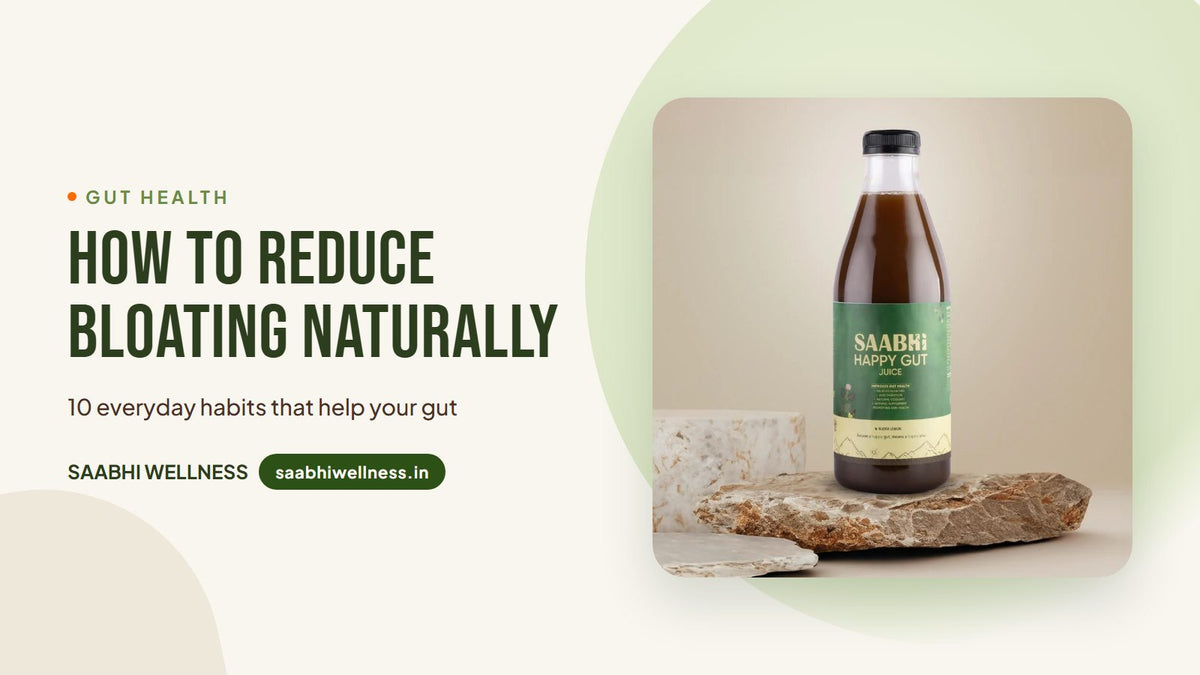
Saabhi Happy Gut Juice brings traditional digestive spices together on a Bijora (citron) juice base. Each 10 ml has Jeera 400 mg, Pudina 175 mg, Saunf 125 mg, Soonth 125 mg, Kali Mirchi 125 mg, Pippali 125 mg, Dhaniya 125 mg and Tejpata 125 mg, with Kala Namak and Saindhav 60 mg each. Take 30 ml twice a day, after lunch and dinner. It is manufactured under AYUSH licence. It is not sugar-free: the citron base contains natural sugar. See the full gut health range.
Frequently asked questions
How can I reduce bloating naturally?
Eat slowly at regular times, keep portions moderate, skip fizzy drinks and chewing gum, add fibre gradually, notice which foods give you gas, walk for 10 minutes after meals, drink enough water and sleep well. Kitchen spices like jeera and saunf are a traditional addition.
How long does it take for bloating habits to work?
Give steady habits such as slower eating and walking after meals 2 to 3 weeks before judging them. If bloating continues beyond that or gets worse, see a doctor.
Which foods cause the most bloating?
Common triggers are rajma and chole, onion and garlic, cabbage and cauliflower, milk for people who don't digest lactose well, fizzy drinks and sugar-free sweets made with sugar alcohols. Tolerance differs, so a food diary helps.
Is jeera water good for bloating?
Jeera water is a traditional Indian remedy for heaviness and gas after meals. Modern evidence for it is limited, but it is a simple, gentle habit for most people. Boil 1 teaspoon of jeera in a glass of water and sip it warm.
How do I take Saabhi Happy Gut Juice?
Take 30 ml of Saabhi Happy Gut Juice twice a day, after lunch and after dinner. It contains natural sugar from its citron juice base, so it is not sugar-free. Check with your doctor first if you have diabetes, are pregnant or take regular medicines.